The Compliance Blind Spot: Why Your Communications Infrastructure Belongs in Your Energy Audit

Photo: SunTsiuKee111, CC BY-SA 3.0, via Wikimedia Commons
A Regulatory Gap With Real Financial Consequences
Compliance professionals at US enterprises are accustomed to managing two distinct audit tracks: one for communications systems, governed by FCC regulations, data retention requirements, and industry-specific standards; another for energy, shaped by EPA reporting frameworks, state disclosure laws, and increasingly by SEC climate-related disclosure guidance. For years, the separation was logical. The systems were different, the expertise required was different, and the regulatory bodies involved rarely spoke to one another.
That separation is no longer sustainable. The regulatory landscape has shifted in ways that make integrated reporting not just advisable but, in a growing number of jurisdictions, legally necessary. Organizations that have not yet recognized this shift are carrying compliance exposure they may not be aware of — and building it into their operations with every server they provision and every messaging platform they deploy.
Where the Regulatory Frameworks Converge
The EPA's Scope 3 emissions reporting guidance — which covers indirect emissions across a company's value chain — explicitly includes emissions associated with purchased goods and services, capital goods, and the use of sold products. For organizations with significant communications infrastructure, this framing captures a substantial portion of their technology footprint: data center energy consumption, network equipment operation, cloud platform usage, and the devices through which employees communicate.
At the state level, the picture is even more direct. California's AB 1305, which took effect in 2024, requires companies making voluntary climate claims to substantiate those claims with detailed emissions data — including Scope 3 categories. New York's Climate Corporate Data Accountability Act imposes similar requirements on large businesses operating in the state. Washington's Climate Commitment Act creates additional disclosure obligations for covered entities.
None of these frameworks include a carve-out for communications infrastructure. A company's email servers, video conferencing platforms, unified communications stack, and the network equipment supporting all of them consume electricity and generate emissions. Under the frameworks now in force or advancing through state legislatures, those emissions must be accounted for.
Why Compliance Teams Are Missing This
The disconnect between communications audits and energy compliance work is not the result of negligence. It reflects the way organizations are structured and the way regulatory guidance has historically been written.
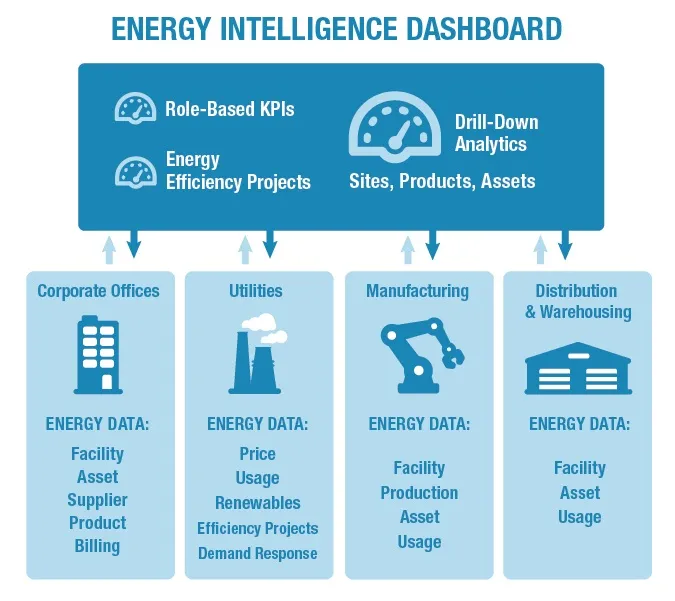
Energy compliance teams typically consist of sustainability professionals, environmental engineers, and legal counsel focused on EPA and state environmental agency requirements. Their audit processes are designed around utility bills, metering data, and facility-level consumption records. Communications infrastructure does not appear in those records in a form that is easy to interpret — it shows up as a line item in a data center's aggregate energy draw, or as part of a cloud provider's shared infrastructure, or not at all.
Communications and IT teams, meanwhile, conduct audits focused on performance, security, and regulatory compliance specific to their domain — FCC licensing, TCPA requirements, call recording obligations, and similar matters. Energy consumption is rarely within scope. When it is considered, it is typically treated as a facilities concern rather than a communications one.
The result is that neither team produces an audit that captures the full picture. The energy audit lacks the granularity to attribute consumption to specific communications systems. The communications audit lacks the framework to translate system activity into energy and emissions data. Regulators increasingly expect both.
What an Integrated Audit Actually Requires
Conducting an audit that satisfies both communications compliance requirements and energy disclosure obligations is not a matter of merging two existing documents. It requires a methodological shift that begins with data collection.
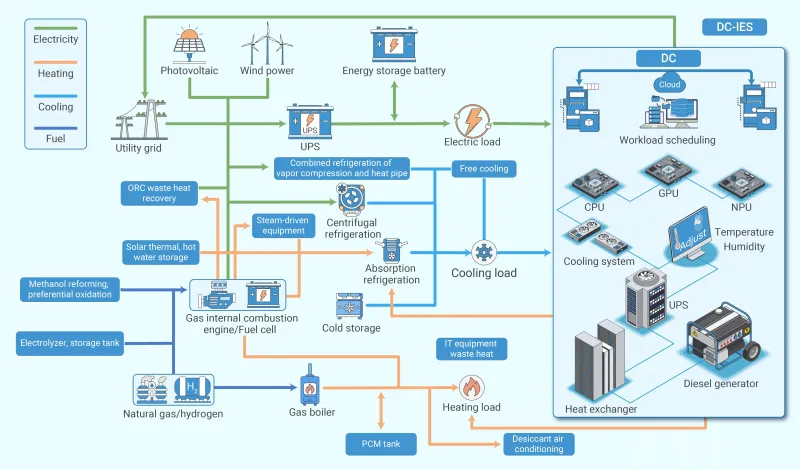
The first step is establishing consumption baselines for each major component of the communications stack. This means working with data center operators or cloud providers to obtain energy use data attributable to your organization's workloads — a figure that many providers now make available through sustainability dashboards or upon request. For on-premises infrastructure, direct metering of communications equipment rooms or server racks is the most accurate approach.
The second step is mapping communications activity to energy consumption patterns. This is where the technical complexity lies. Different communications workloads have materially different energy profiles: a real-time video conferencing session is significantly more energy-intensive per unit of time than an asynchronous messaging exchange. Understanding those profiles allows compliance teams to model how changes in communications behavior — a shift from video to audio-only calls, for example, or a consolidation of messaging platforms — translate into measurable emissions reductions.
The third step is aligning the resulting data with the specific reporting categories required by applicable frameworks. Scope 3 Category 1 (purchased goods and services) and Category 11 (use of sold products) are the most commonly relevant for communications infrastructure, but the appropriate categorization depends on the organizational structure and the nature of the infrastructure in question. Legal and sustainability counsel familiar with EPA guidance should validate the classification before any public disclosure is made.
The Competitive Dimension
Beyond regulatory compliance, there is a strategic argument for this kind of integrated audit that deserves attention.
Enterprise procurement decisions increasingly incorporate supplier sustainability assessments. Large US corporations — particularly those in financial services, healthcare, and technology — are asking their vendors to provide verified emissions data as part of RFP processes. Organizations that cannot provide granular, credible data on the energy implications of their communications infrastructure are at a disadvantage in those conversations.
Conversely, organizations that can demonstrate a rigorous, integrated approach to energy and communications compliance are positioned to differentiate themselves. The ability to show that your communications stack has been audited for energy efficiency, that your emissions reporting captures the full scope of your technology footprint, and that your compliance processes are structured to anticipate regulatory evolution — these are competitive assets in an environment where ESG performance is increasingly scrutinized by customers, investors, and regulators alike.
Building the Capability Before the Deadline
The most significant risk in the current environment is delay. Regulatory timelines for state-level energy disclosure requirements are moving faster than many compliance teams anticipated. Organizations that begin building integrated audit capability now — establishing data collection processes, aligning team responsibilities, and piloting cross-functional reporting workflows — will be substantially better positioned than those that wait for a specific deadline to force action.
The communications audit your organization conducts this year should not look the same as the one it conducted five years ago. The regulatory context has changed, the technical tools to support integrated reporting have matured, and the cost of maintaining two separate, incomplete audit processes is rising. The time to close the gap between communications compliance and energy disclosure is not when a regulator asks the question — it is before the question is asked.