Distributed Workforces Are Quietly Inflating Your Energy Bill — Here's the Audit That Fixes It

Photo: White House photograph by Joyce Boghosian, Public domain, via Wikimedia Commons
The Promise vs. The Reality of Hybrid Work
When the hybrid work model took hold across corporate America, the business case seemed straightforward: fewer people in the office would mean lower utility bills, reduced real estate overhead, and a leaner operational footprint. For a significant number of companies, however, the opposite has proven true. Rather than consolidating infrastructure, many organizations have simply duplicated it — maintaining full office systems while simultaneously funding the remote communication stacks, home-office stipends, and cloud services that distributed teams depend on.
The result, according to energy consultants and facilities managers who have conducted audits across mid-sized US enterprises, is that hybrid setups frequently consume between 30 and 45 percent more energy than either a fully in-office or a fully remote configuration would on its own. That range is not an anomaly. It reflects a structural problem in how hybrid work has been implemented, rather than a flaw in the concept itself.
Where the Waste Actually Lives
Understanding the energy drain requires looking beyond the obvious — office lighting and HVAC — and examining the less visible layers of a modern hybrid operation.
Idle infrastructure that never powered down. Many organizations transitioned to hybrid work by adding remote capabilities on top of existing systems, rather than replacing or scaling back what was already in place. Conference room AV equipment, on-premises servers, and workstation fleets continue to draw power during off-peak days, even when building occupancy has dropped by 50 percent or more. A building designed for 200 daily occupants that now sees 80 people on any given Tuesday is still running climate control, lighting zones, and network infrastructure at near-full capacity.
Redundant communication platforms consuming cloud compute. The average mid-market company operating a hybrid model runs between four and seven communication tools simultaneously — video conferencing platforms, persistent messaging apps, legacy email servers, VoIP systems, and project management suites that include their own notification and messaging layers. Each of these platforms maintains background processes, syncs data continuously, and draws on data center resources around the clock. When these systems are not integrated, the redundancy multiplies. Employees routinely duplicate communications across platforms, which means data is stored, transmitted, and processed multiple times for a single interaction.
Underoptimized data centers and cloud configurations. Remote work accelerated cloud adoption, but speed rarely favors efficiency. Many businesses migrated workloads to cloud environments without right-sizing their instances or implementing intelligent scaling policies. The consequence is persistent over-provisioning — paying for and consuming compute capacity that sits idle during non-business hours, over weekends, and across time zones when collaboration is minimal.
Conducting a Meaningful Energy Audit for Hybrid Operations
A hybrid-specific energy audit differs from a traditional facilities review in one critical respect: it must account for distributed consumption, not just the square footage your company controls.
Step one: Map your full infrastructure footprint. Begin by cataloging every system that consumes power in service of your workforce — from on-premises hardware to contracted cloud services. Assign each asset to a category: office-bound, remote-support, or shared. This mapping exercise frequently surfaces infrastructure that has been paying for itself twice.
Step two: Measure occupancy against consumption. Pull energy data from your building management system and cross-reference it against badge access records or desk booking data over a 90-day period. The gap between occupancy rates and energy draw will quantify how much your office infrastructure is running for diminishing returns.
Step three: Audit your communication stack's energy profile. This step is often overlooked but consistently reveals meaningful savings. Request data usage reports from your cloud service providers and communication platform vendors. Calculate the combined storage, compute, and bandwidth your tools are consuming. Identify where overlap exists — particularly where two or more platforms are being used for functionally identical purposes.
Step four: Review remote work energy policies. If your organization provides home-office stipends or equipment, consider whether those devices are configured for energy efficiency. Endpoint management policies that enforce sleep settings, screen timeout thresholds, and software update schedules during off-hours can reduce per-device consumption by a measurable margin across a distributed fleet.
Practical Interventions That Deliver Measurable ROI
Once the audit is complete, the path to efficiency becomes considerably clearer. The following interventions have demonstrated consistent results for US businesses operating hybrid models.
Zone-based building controls. Investing in smart building systems that modulate HVAC, lighting, and power distribution based on real-time occupancy data is one of the highest-return changes an organization can make. Modern systems can reduce building energy consumption by 20 to 35 percent in hybrid environments without any reduction in employee comfort.
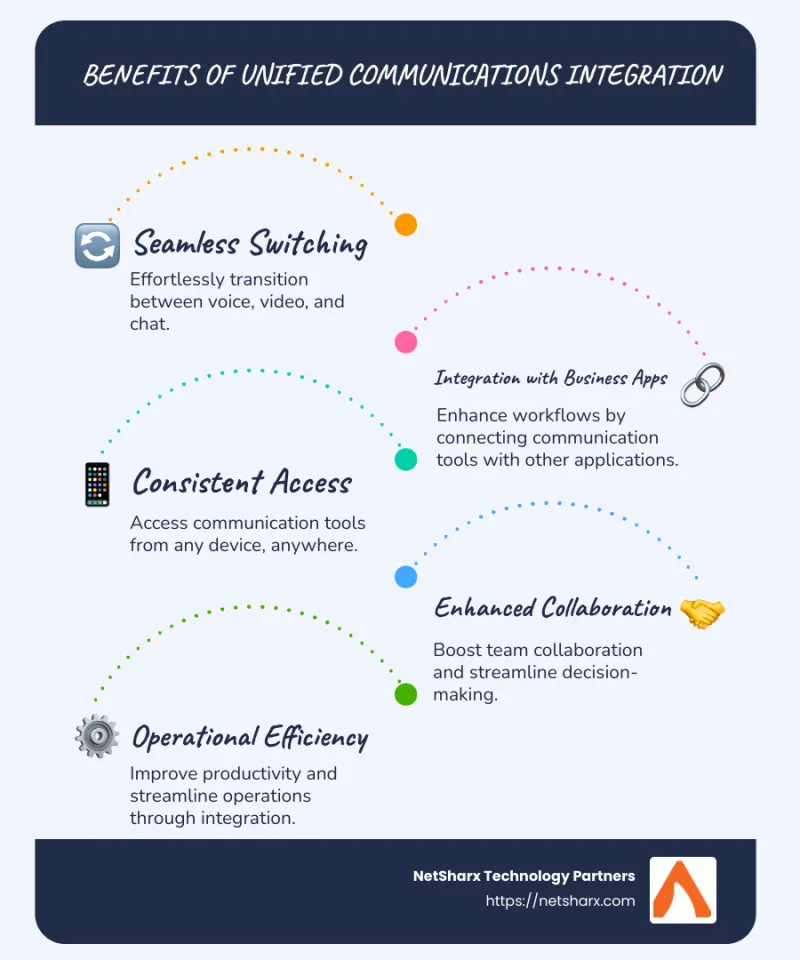
Platform consolidation. Reducing your communication stack from six tools to three — or ideally to a unified communications platform that handles messaging, video, voice, and file sharing in a single environment — eliminates redundant cloud compute, reduces data storage duplication, and cuts the administrative overhead associated with managing multiple vendor relationships. The energy savings are secondary to the productivity gains, but they are real and quantifiable.
Cloud resource governance. Implementing automated scaling policies, reserved instance purchasing for predictable workloads, and scheduled shutdowns for non-production environments can reduce cloud spend — and the associated energy consumption — by 25 to 40 percent for organizations that migrated quickly without optimization.
Remote device lifecycle management. Replacing aging endpoint hardware with energy-efficient models, and enforcing power management policies through a centralized mobile device management system, compounds savings across a distributed workforce in ways that a single office intervention cannot.
The Strategic Case for Acting Now
Energy costs in the United States have risen materially over the past three years, and the trajectory for commercial electricity rates in major metro markets suggests continued upward pressure. For businesses operating on hybrid models, the compounding effect of inefficient infrastructure against a rising rate environment means that inaction carries an increasingly steep price.
Beyond the financial argument, there is a regulatory dimension worth monitoring. Several states — California, New York, and Massachusetts among them — are advancing commercial energy efficiency requirements that will eventually affect how mid-market companies report and manage their operational footprints. Building efficient hybrid infrastructure now positions organizations ahead of compliance obligations that are likely to become mandatory within the next legislative cycle.
The hybrid model is not inherently wasteful. When architected deliberately — with energy-aware infrastructure decisions, a rationalized communication stack, and governance policies that align consumption with actual demand — it can deliver on its original promise. The audit is where that process begins.