Your Energy-Efficient Comms Stack Is Telling You a Comfortable Lie

There is a particular kind of false confidence that comes from a green certification badge. It appears on vendor datasheets, slides through procurement reviews without scrutiny, and eventually settles into the assumptions your facilities and IT teams carry into every energy conversation. The badge says efficient. The bill says otherwise.
For most US organizations operating at any meaningful scale, communications infrastructure has become one of the more consequential contributors to total energy expenditure. Yet the methodology most businesses use to measure that consumption is structurally flawed — not through negligence, but because the tools and frameworks available tend to stop at the application layer. What lies beneath that layer, humming quietly inside your network closets and edge rack enclosures, is where the real story begins.
The Measurement Gap Nobody Advertises
When a vendor quotes power consumption figures for a unified communications platform, a cloud-connected PBX system, or a collaboration suite, that figure almost always reflects the software's operational demands as measured in a controlled lab environment. It accounts for processor cycles, active sessions, and data throughput under representative test conditions. What it rarely captures is the full constellation of hardware that must remain active to support even a single conversation.
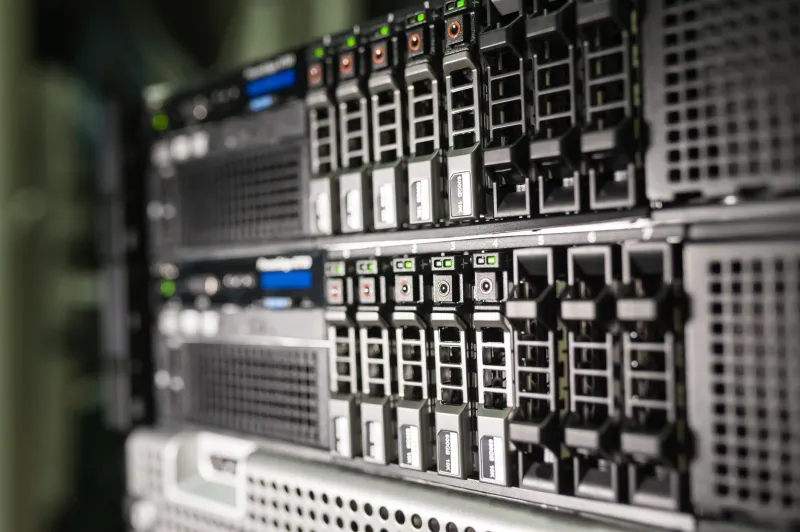
Network switches do not power down between calls. Routers do not rest while your team is in a meeting. Edge devices that handle authentication, traffic shaping, and local failover run continuously, drawing power whether your system is processing ten simultaneous video calls or sitting idle at three in the morning on a federal holiday. Industry analysis has consistently placed this category of consumption — often called phantom load — at somewhere between 30 and 40 percent of a communications infrastructure's true energy footprint.
That is not a rounding error. In a mid-sized enterprise with a moderately complex comms stack, that gap can translate into tens of thousands of dollars annually in unaccounted energy costs, plus a proportional carbon liability that your sustainability reporting has never once acknowledged.
Why Vendor Claims Systematically Fall Short
The undercount is not random. It follows a predictable logic rooted in how vendors define the boundaries of their product. A communications software company measures what its software consumes. It does not measure the power draw of the third-party switch your networking team installed two refresh cycles ago, or the legacy firewall appliance that sits between your VoIP trunks and the outside world, or the UPS units conditioning power to the rack where all of it lives.
Each of those components carries its own load. Each operates on its own duty cycle. And none of them appear in the energy figure your vendor cited during the sales process.
The cumulative effect is that organizations relying on vendor-supplied consumption data are, in many cases, underestimating their communications energy footprint by as much as half. The number your CFO approved in the sustainability budget is not the number your utility is billing against. The gap is being absorbed somewhere — typically in a facilities line item that nobody has connected to communications infrastructure because the organizational chart does not encourage that kind of cross-functional accounting.
Conducting an Honest End-to-End Audit
A genuine communications energy audit begins with a topology map, not a vendor datasheet. Before any measurement occurs, your team needs a complete inventory of every physical component that participates in your communications stack — from the core switching fabric in your primary data center or colocation facility, through every distribution layer device, to the access switches, wireless access points, edge routers, and endpoint hardware deployed across each location.
Once that inventory exists, the measurement phase requires inline power monitoring at the device level. Intelligent power distribution units with per-outlet metering, or dedicated energy monitoring sensors attached to individual rack components, provide the granularity necessary to distinguish between what a device consumes under load and what it draws in its baseline idle state. Both figures matter. The idle figure, multiplied across hundreds of devices and thousands of hours, is frequently where the largest aggregate waste is found.
Pay particular attention to three categories of hardware that consistently generate the highest phantom load relative to their perceived importance:
Network switches with partial port utilization. Most enterprise switches are configured to keep all ports active regardless of whether anything is connected to them. A 48-port switch with 12 active connections is still running all 48 ports at near-full power. Port-level power management policies, where supported, can recover a meaningful portion of that draw.
Aging edge appliances running beyond their rated efficiency window. Hardware that was energy-efficient by the standards of its purchase year may be operating at significantly degraded efficiency today. Appliances five or more years old frequently consume 20 to 35 percent more power per unit of work than current-generation equivalents, while also introducing latency and reliability risks that compound the operational cost.
Redundant infrastructure sized for peak loads that rarely materialize. Failover systems and backup communications hardware are necessary. But many organizations have provisioned redundancy at a scale that made sense for a peak load projection that never arrived. That overprovisioning carries a permanent energy cost that accrues every hour the infrastructure remains in service.
Connecting the Audit to Actionable Decisions
The output of a thorough phantom load audit is not simply a more accurate energy number. It is a prioritized remediation map. Some findings will point toward configuration changes that cost nothing to implement. Others will surface hardware that has reached the point where replacement delivers both energy savings and operational improvements sufficient to justify the capital expenditure within a reasonable payback window.
For organizations operating under voluntary or mandatory sustainability reporting frameworks — whether aligned to GHG Protocol standards, SEC climate disclosure guidance, or state-level requirements increasingly common in California, New York, and Massachusetts — the accuracy of this data carries implications beyond internal budgeting. Reporting figures derived from application-layer estimates alone may not withstand scrutiny as disclosure standards tighten.
There is also a procurement dimension. Organizations that have conducted rigorous end-to-end audits are in a substantially stronger position to evaluate vendor energy claims with appropriate skepticism. When a vendor presents a power consumption figure, the right question is not whether that number is accurate for their product in isolation. The right question is what the total system draw looks like when their product is integrated into your specific infrastructure environment. The difference between those two figures is where phantom load lives.
The Honest Baseline
Efficiency claims made at the product level are not inherently dishonest. They are simply incomplete. The organizations that will manage communications energy costs most effectively in the years ahead are those willing to look past the datasheet and conduct the kind of end-to-end measurement that reveals the infrastructure's true consumption profile.
The phantom load is not hiding. It is simply in a place that most energy audits have never been designed to look. Building the methodology to find it is no longer optional for organizations serious about both cost discipline and credible sustainability commitments. It is the baseline from which every other conversation about communications energy management should begin.