The Capacity Question Your Network Refresh Plan Forgot to Ask
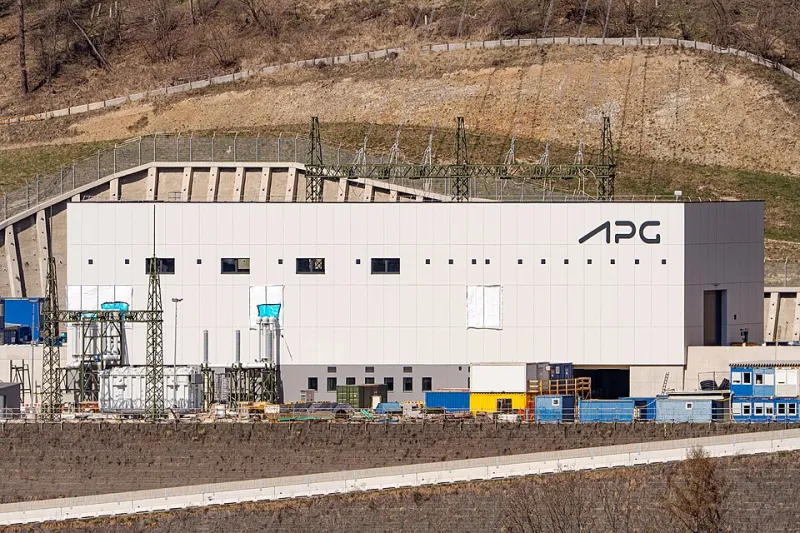
Photo: Aciarium, CC BY-SA 4.0, via Wikimedia Commons
The Grid Is No Longer a Background Utility
For most of the past decade, enterprise communications planning treated electrical capacity as a background assumption. If a site needed more power, the utility would provide it. If a colocation provider needed to expand, the local grid would accommodate. That assumption is now unreliable in many US markets. Data-center demand, electrification of heating and transport, and the slow pace of grid upgrades have created interconnection queues and capacity constraints that directly affect communications infrastructure.
The result is a new planning variable. A network refresh that assumes unlimited power at a given site may find that the utility cannot provide additional capacity for years. A disaster-recovery strategy that depends on a specific colocation facility may discover that the facility itself is waiting on a grid upgrade. A vendor contract that promises certain performance levels may become impossible to meet because the underlying power infrastructure cannot support the load.
How Interconnection Delays Reach Your Comms Room
Interconnection queues are the utility process for connecting new loads or expanding existing ones. In several US regions, those queues have grown long. Large data-center projects dominate the queue, but enterprise facilities are affected too. A comms room expansion that requires an additional 100 kilowatts may be treated as a small project, but it still enters the same queue and waits behind larger requests for engineering studies and grid upgrades.
The delay propagates through the communications stack in predictable ways. Colocation providers facing capacity constraints raise prices or ration space. Network vendors face longer lead times for equipment that requires higher power densities. Disaster-recovery siting becomes harder because suitable facilities with available capacity are fewer and farther between. Even routine refresh cycles can stretch from months to years when power availability, not equipment availability, becomes the binding constraint.
A 2026 Capacity Playbook
Enterprises can manage this risk by adding capacity questions to standard planning processes. The playbook has four elements.
Map current capacity and feeder dependencies. For each communications site, document the utility feeder, current peak demand, available capacity, and any known constraints. This information is often scattered across facilities, IT, and finance. Consolidating it is the first step toward informed planning.
Engage utilities early and specifically. Ask the utility for the site's current capacity allocation, the expected timeline for any requested increase, and the position of the request in the interconnection queue. Generic assurances are not enough. Request written estimates and identify the specific grid upgrades that would be required.
Include capacity clauses in vendor contracts. Communications vendors and colocation providers should be required to disclose their power dependencies and any known constraints. Contracts should address what happens if capacity is delayed: service-level credits, alternative routing options, or exit rights. A vendor that cannot describe its capacity risk is a vendor that has not planned for it.
Stress-test disaster-recovery assumptions. If a DR site depends on a specific facility or region, verify that the facility has firm capacity and that the utility has no pending constraints that could affect failover. Consider geographic diversity that accounts for grid topology, not just distance.
Questions That Standard Checklists Miss
Most procurement checklists ask about availability, latency, and price. Few ask about power capacity. The following questions should be added before any communications refresh or vendor commitment.
For utilities: What is the current available capacity at this service address? What is the expected timeline for an increase? Are there any planned grid upgrades or load restrictions that could affect this site? What is the process and cost for an interconnection study?
For colocation providers: What is the facility's current power capacity and utilization? Are there any constraints on additional power draws? What is the provider's own dependency on utility upgrades? How are capacity risks allocated in the contract?
For communications vendors: What are the power requirements of the proposed equipment at peak load? Does the solution assume availability of backup power or cooling that may not exist at the site? What happens to performance if power capacity is reduced or delayed?
These questions do not eliminate grid risk. They make it visible. In a year when US data-center demand is reshaping utility planning, visibility is the minimum requirement for a communications strategy that intends to remain operational. The alternative is a refresh plan that looks complete on paper but depends on a power supply that never arrives.