Your Chatbot Has an Electric Meter Somewhere: Pricing the Real Cost of Enterprise AI
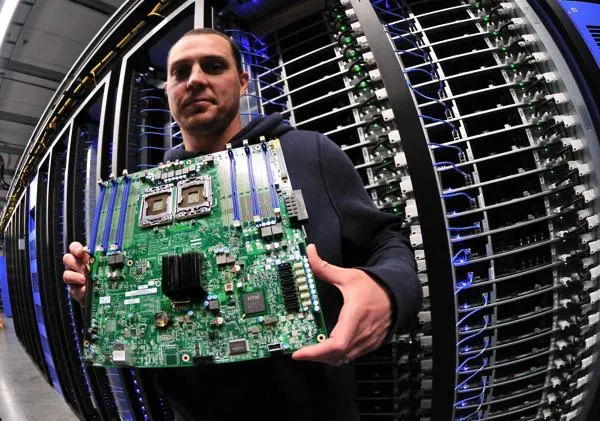
Photo: Intel Free Press, CC BY 2.0, via Wikimedia Commons
Somewhere between the demo and the deployment, enterprise AI acquired a convenient fiction: that intelligence is weightless. A customer asks a chatbot a question at 2 a.m., an answer materializes, and the interaction appears on no meter anywhere. In reality, every one of those exchanges is a physical event — GPUs spinning in a data center in Northern Virginia or Oregon, pulling power from a regional grid, generating heat that must be chilled away. The fiction persists because the bill arrives disguised as something else.
The Pricing Model Is Designed to Obscure the Physics
Traditional software was priced per seat, and seats mapped loosely to value. AI-powered communication tools have inherited that pricing language while abandoning its logic. A transcription service charges per hour of audio. A support bot charges per resolution or per conversation. An enterprise assistant charges per seat per month. In none of these models does the customer see the variable that actually drives the vendor's cost: compute cycles, and the electricity they consume.
This matters more in 2025 than it did even two years ago. Inference at scale is not a rounding error. A single large-language-model query can consume orders of magnitude more energy than a conventional web request, and enterprises are now routing enormous volumes of routine communication — meeting summaries, email drafting, live call transcription, customer triage — through these systems by default. What was once an occasional AI flourish has become ambient infrastructure, running continuously whether or not anyone is watching.
The opacity is not accidental. Per-seat pricing converts a variable, energy-intensive cost into a predictable revenue stream for the vendor — and a fixed, unexamined line item for the customer. When usage spikes, the vendor's margin compresses quietly; when usage falls, the enterprise keeps paying. Either way, the kilowatts stay invisible.
Estimating Your Stack's True Wattage
Complete transparency may be years away, but a disciplined estimate is available today. Start with volume: how many AI-mediated interactions does your organization generate monthly — support tickets resolved by bot, hours of meetings transcribed, assistant queries per employee? Multiply by publicly discussed industry benchmarks for per-query energy consumption, recognizing that figures vary widely by model size and task complexity. The result will be rough. It will also be the first honest number anyone in your finance department has ever attached to AI communications.
Then interrogate the architecture. Not every task warrants a frontier model. Many transcription and summarization workloads run acceptably on smaller, far less power-hungry systems, and a growing number of vendors offer model-tier selection. Choosing deliberately rather than by default is the single largest lever most enterprises control.
Four Contractual Questions to Ask Before Renewal
- Can we obtain per-interaction or per-token consumption reports, in exportable form, for our account?
- Is there a lighter-weight model tier for routine workloads, and what does it save?
- What happens during idle periods — do background agents, indexing, and scheduled summaries run continuously?
- Where does our inference execute, and what is the energy profile of that region's grid?
A vendor who answers readily is a partner. A vendor who answers with a sustainability marketing page has told you something too.
Intelligence Has a Utility Bill
None of this is an argument against enterprise AI. It is an argument against adopting it the way previous generations adopted electricity — enthusiastically, and without a meter. The companies that will manage AI communications well are the ones treating it like any other energy-consuming infrastructure: measured, attributed, and negotiated. The wattage is real. The only question is whether it appears on your ledger or hides inside someone else's.